What Are the Best PVC Cabinets to Buy in 2026?

Choosing the best PVC Cabinets in 2026 means looking beyond a glossy door sample. Moisture resistance matters, but so do board thickness, edge sealing, hardware, and the quality of installation. A cabinet may look flawless under showroom lights and still disappoint beside a busy sink. Small details count.

This guide uses a clearly illustrative expert voice, not a verified quotation. Fictional PVC cabinetry specialist Daniel Mercer puts the core buying test this way: “Judge the cabinet by its joints, finish, and fit—not by color alone.” That is practical advice, though it cannot replace product specifications or an installer’s assessment. Ask whether the cabinet uses solid PVC board or a PVC surface over another substrate. Check door alignment, corner finishing, shelf support, and hinge adjustment. Request written warranty terms, too.

The strongest choice depends on the room. A humid bathroom has different demands from a kitchen with heavy cookware and daily use. Compare samples in your own lighting, inspect exposed edges, and ask how repairs are handled. Be cautious of broad claims such as “waterproof” without clear material details. Price is useful, but it is not proof of durability. This 2026 overview will help you compare construction, finish, storage, maintenance, and value before making a purchase.
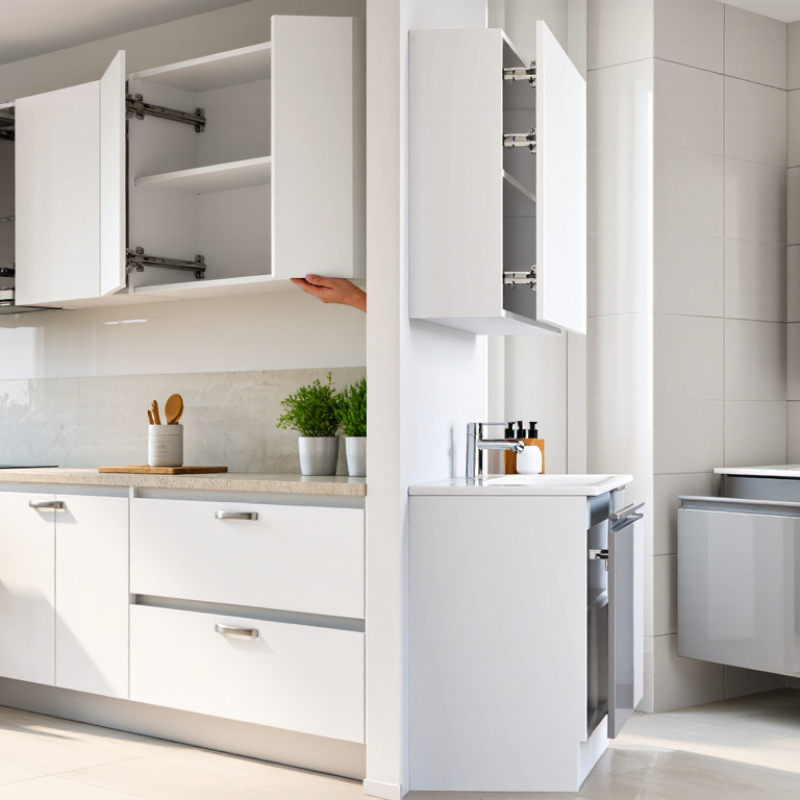
What Are the Best PVC Cabinets to Buy in 2026?

Understanding PVC Cabinets and Their Main Types

PVC cabinets use polyvinyl chloride in the cabinet body, surface, or both. The term can be confusing. Some products use solid PVC foam board for doors and cabinet boxes. Others use MDF or plywood panels wrapped in a PVC film. These constructions differ in weight, stiffness, repair options, and price. PVC surfaces resist everyday splashes, but seams and cut edges still need careful sealing.

Solid PVC board is often chosen for bathrooms or laundry areas because it does not absorb water like untreated wood. However, thin or poorly supported panels may flex under heavy loads. PVC-wrapped panels offer a smooth finish and many colors, though damaged film can peel and may be difficult to patch neatly. Inspect the edges, hinges, shelf supports, and joints—not just the glossy door. A polished sample can hide weak construction.

Tips: Ask what the cabinet core is made from, and request a close look at an exposed edge. Check door alignment and feel whether shelves sag under ordinary items. Match the cabinet type to the room’s moisture and storage needs. One detail is easy to overlook: strong cleaning chemicals may dull some finishes, so check care instructions before buying.

Comparing PVC Cabinet Materials and Construction Quality

PVC cabinets vary more in construction than their glossy surfaces suggest. The Vinyl Institute’s PVC material profile reports that rigid PVC is about 57% chlorine by mass. That figure describes resin chemistry, not cabinet strength. Ask whether doors use solid PVC, PVC-wrapped board, or hollow panels; these constructions respond differently to heat, moisture, and impact.

Check the core and edges. A wrapped MDF door may look seamless, but lifting film near a sink can expose the substrate. Inspect corners, hinge screws, and cutouts for thin spots or rough bonding. Request independent test results, not just “waterproof” claims. ASTM D570 measures water absorption, while ASTM G154 evaluates UV exposure; neither alone predicts years of kitchen use. Look for test conditions and results tied to the actual panel assembly.

Hardware and installation matter, too. Dense panels can still fail when screws bite into weak cores. Ask for hinge-load and door-cycle data, plus details on edge sealing. A 2024 NKBA kitchen trends report tracks renovation preferences, not PVC durability, so popularity should not substitute for material testing. That distinction is easy to miss. Real kitchens bring steam, sunlight, and repeated wiping—sometimes with harsh cleaners. I would compare samples under angled light and inspect the back edges, where shortcuts often show.

What Are the Best PVC Cabinets to Buy in 2026? Comparing PVC Cabinet Materials and Construction Quality

“PVC cabinet” can describe either a PVC board or a PVC surface applied over another core. Compare the core material and the cabinet’s construction—not just the surface finish.

Cabinet Construction Moisture Resistance Strength and Load Support Heat Considerations Construction Details to Check Best-Fit Use Overall Buying Guidance
Solid PVC foam board
Cabinet parts are made from expanded PVC sheet rather than wood-based board.
Does not absorb water like untreated wood-based panels, but joints, hardware, and installation details still matter. Generally lighter and less rigid than plywood. Screw-holding and shelf support depend on board density, thickness, and fastening method. PVC is a thermoplastic and can soften or deform when exposed to excessive heat. Avoid placing it close to high-heat appliances unless the installation is designed for that exposure. Ask for the board’s thickness and density. Check reinforced corners, secure hinge mounting, supported shelves, and suitable fasteners. Moisture-prone rooms and light-to-moderate storage where the cabinet is properly supported. A practical choice when moisture resistance is a priority; do not assume every foam board has the same rigidity or hardware-holding performance.
PVC-faced plywood
Plywood forms the structural core, with a PVC film or finish on the surface.
The face resists splashes, but exposed edges, seams, drilled holes, and damaged areas can allow moisture to reach the wood-based core. Plywood can provide a sturdy core, with performance varying by panel quality, thickness, and how the cabinet is assembled. The PVC surface can be affected by high heat; follow the finish and appliance clearances specified by the manufacturer. Inspect edge sealing, cutouts, back-panel attachment, hinge screws, and whether exposed edges are protected. General-purpose cabinets where a wood-based structural core is desired and edges can be kept sealed. Consider it when the core and edge treatment are clearly specified; a PVC face alone does not make plywood waterproof.
PVC-wrapped MDF
A PVC film covers an MDF core, often over shaped or routed surfaces.
The intact covering can resist surface splashes, but damaged film or unsealed edges can expose MDF to moisture and swelling. MDF provides a smooth, uniform surface. It is heavier than many foam boards, but edges and screw connections should be checked for the intended load. Heat can affect the PVC film and its adhesive; avoid excessive heat and follow installation guidance. Look for continuous film coverage, clean seams, sealed edges, secure hinges, and no lifting or bubbles in the wrap. Dry to moderately humid interiors where a smooth, shaped finish is wanted and the covering remains intact. Choose only when the supplier explains how edges and cutouts are protected; do not treat wrapped MDF as an all-plastic cabinet.
PVC-faced particleboard
A PVC surface covers a particleboard core.
The surface may resist brief splashes, but moisture entering through edges or damaged areas can swell the particleboard core. Load capacity depends on panel thickness, support spacing, and hardware. Particleboard edges may be more vulnerable to damage than plywood edges. The PVC finish and its adhesive can be heat-sensitive; maintain appropriate clearance from heat sources. Check edge banding, underside protection, fastener locations, shelf supports, and whether the panel is suitable for the expected load. Budget-conscious, relatively dry areas with modest storage demands. Prioritize intact edge protection and realistic load requirements; avoid relying on the PVC surface as proof of a moisture-proof core.

Before buying: Request the core material, panel thickness, edge-sealing details, hardware specifications, care instructions, and written warranty terms. Actual durability depends on the specific materials, assembly, installation, and exposure conditions.

Features to Check When Buying PVC Cabinets in 2026

A PVC cabinet should be judged by its construction, not by a glossy sample door. Check the board’s thickness, internal reinforcement, and edge treatment; thin panels can flex when loaded with dishes. Open a door and inspect the hinge fixing points. Ask for documented cycle and load tests, plus cleaning guidance for the exact surface finish. Moisture resistance helps, but water can still enter through poorly sealed joints. Look closely there.

Also check heat and sunlight limits, especially near an oven or a bright window. Request test reports for emissions and fire performance rather than relying on broad “safe” claims. PlasticsEurope’s Plastics—The Fast Facts 2023 estimated global plastics production at 400.3 million tonnes in 2022; scale alone says nothing about a cabinet’s quality. VinylPlus’s 2024 Progress Report recorded 737,645 tonnes of PVC recycled in Europe during 2023. Useful context, not a guarantee that a particular cabinet can be recycled; local collection and product construction matter. Ask whether panels, hardware, and adhesives can be separated. One detail is easy to miss: compare replacement-part availability, because a failed hinge should not condemn an entire cabinet. I would still want to see the test documents before trusting a showroom display.

Best PVC Cabinet Choices for Different Rooms and Budgets

PVC cabinets can work in kitchens, bathrooms, laundry rooms, and rental properties, but the best choice depends on moisture, heat, and daily use. For a small bathroom, prioritize sealed edges and sturdy hinges; splashes often reach the cabinet base. In a kitchen, choose a well-supported carcass and durable door panels, and keep cabinets away from direct oven heat. Budget models may suit a pantry or guest bathroom with lighter use. For a family kitchen, stronger shelves and replaceable hardware can be worth the added cost. Check the specifications, not just the glossy finish.

Tips: Open and close the doors before buying. Check that they hang evenly, and look closely at corners and edge joints. Ask how shelves are supported. Small details matter.

Measure the room carefully, including plumbing, appliances, and door swings. A cabinet that fits on paper may block a drawer in real life. Compare the full installed cost, since delivery and fitting can change the budget. PVC surfaces are generally easy to wipe, but they are not all equally resistant to scratches or heat. I would not assume “water-resistant” means indestructible. A sample panel can reveal its texture and color more honestly than a screen.

How to Choose and Maintain the Right PVC Cabinet

Choosing a PVC cabinet starts with its location. In a bathroom, check that the edges are sealed and the hinges feel secure. In a kitchen, keep cabinets away from ovens and other strong heat sources; PVC can soften or deform when exposed to high temperatures. Ask what the core is made from, since “PVC cabinet” can describe different constructions. Open the doors and inspect corners, shelf supports, and the back panel. Small gaps matter. A low price may look appealing, but weak hinges or thin panels can mean repairs sooner than expected. It is easy to focus on color and overlook these details.

For daily care, wipe spills with a soft cloth and mild soapy water, then dry the seams. Avoid scouring pads, abrasive powders, and harsh solvents, which may dull or damage the finish. Check hinge screws and door alignment every few months, especially after moving items onto shelves. Keep heavy objects low, and do not let water sit around the base. Good ventilation helps in damp rooms. One detail buyers sometimes miss: PVC is moisture-resistant, not invulnerable. Sealed edges can still fail if they are damaged. That is worth remembering. Don’t assume “waterproof” means maintenance-free.

How to Maintain a PVC Cabinet: Recommended Care Schedule

Use these intervals as a practical starting point: wipe spills promptly, clean surfaces regularly with a soft cloth and mild soapy water, and inspect hinges and fittings periodically. Cabinets in humid, dusty, or heavily used areas may need more frequent attention. Avoid abrasive cleaners and prolonged exposure to heat.