Choosing leather reclining chairs is less about finding the softest seat and more about matching a chair to your body, room, and daily habits. AARP’s 2021 Home and Community Preferences Survey found that 77% of adults aged 50 and older want to remain in their homes as long as possible. That makes practical comfort worth considering, even for buyers who are much younger. But a survey about aging at home cannot tell you which chair will fit your living room.
“ The best posture is the next posture,” is advice often associated with Cornell ergonomics researcher Alan Hedge. It is a useful reminder: reclining should allow comfortable movement, not lock you into one position. Try the chair in person if possible. Check whether your feet rest naturally, the lumbar area feels supported, and the footrest opens without pressing against your calves. Small details matter.
Leather is not magic. Its feel, upkeep, and appearance vary with the hide, finish, and construction. A showroom chair may also feel different after an hour at home. I would treat claims such as “premium leather” cautiously unless the seller explains which surfaces are covered and how the material should be maintained. The right choice depends on more than a label.
This guide will compare leather types, recliner mechanisms, sizing, comfort, durability, and care. It will also highlight questions to ask before buying, from warranty coverage to delivery access. A careful fit check can prevent an expensive mismatch. Comfort is personal. A chair that looks perfect may still be wrong for your back, your space, or your routine.
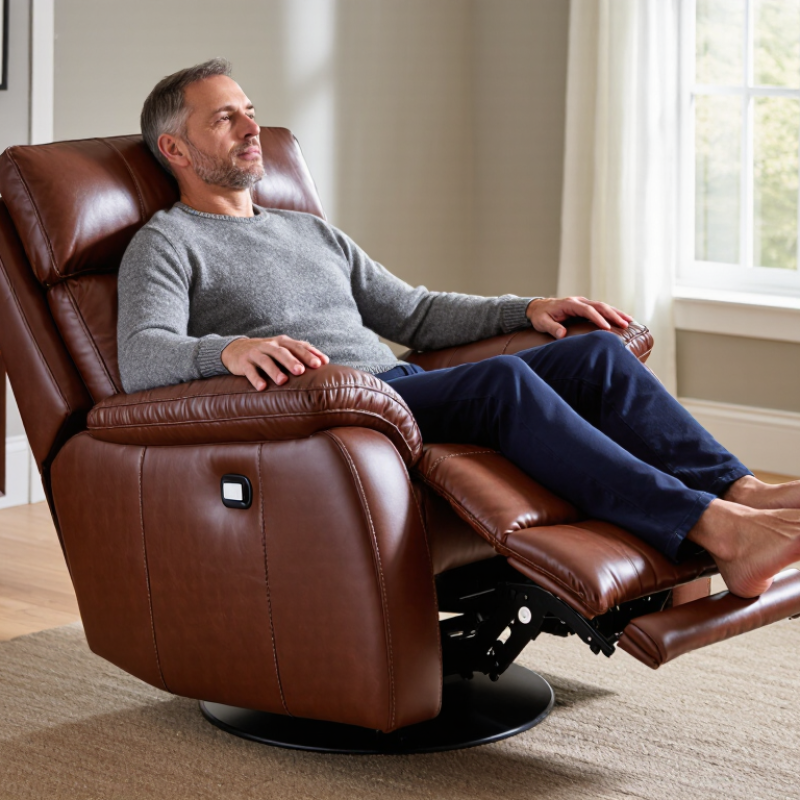
Before choosing a leather recliner, measure the space it uses when fully open, not only its closed footprint. Mark the chair’s position with painter’s tape, then check nearby tables, doorways, and walking routes. Measure twice. The U.S. Census Bureau’s 2023 Characteristics of New Housing report put the median floor area of new single-family homes at 2,286 square feet. That national figure cannot predict your living-room layout; a modest room may still have plenty of usable space, or none near the sofa. Check the chair’s required wall clearance and leave room for the footrest to extend without blocking a walkway.
Think about how you will recline on an ordinary evening. The Bureau of Labor Statistics’ 2023 American Time Use Survey reported about 5.2 hours of daily leisure and sports time for people aged 15 and older. That category includes many activities, not just sitting, but it underscores how often comfort can matter. Do you read upright, nap with your feet raised, or watch television for long stretches? Test the headrest, lumbar support, and controls in the positions you actually use. Details matter. A tape measure can miss how awkward a side table feels once the footrest is out. And a compact chair may fit beautifully while feeling less enveloping than expected. Comfort is personal.

Use these typical residential recliner planning dimensions to compare chair sizes before purchasing. Measure both the upright and fully reclined positions, and leave additional space for side access, tables, and walkways. Actual dimensions vary by chair design, so always confirm the product measurements.
How to Choose the Best Leather Reclining Chairs
Leather type and grade affect comfort, aging, and maintenance. Full-grain leather keeps the natural grain, so scars and color variation remain visible. It usually develops a richer patina. Top-grain leather is lightly corrected and often feels more uniform. Split leather comes from lower hide layers and usually receives a strong surface coating. Bonded leather contains leather fibers mixed with synthetic materials. It costs less, but its surface may peel sooner.
Read beyond the word “leather.” Leather Naturally’s technical guidance distinguishes aniline, semi-aniline, and pigmented finishes. Aniline leather feels soft and natural, but absorbs spills quickly. Pigmented leather has a protective color layer and suits busy households better. FAO’s 2023 Statistical Yearbook recorded 361 million tonnes of global meat production in 2022. That scale explains leather’s broad availability, but it does not guarantee quality. Hide selection and finishing still matter.
Check the upholstery features closely. Look for reinforced seams, evenly padded arms, and a smooth transition around the footrest. A reclining chair should open without scraping or sudden jerks. Ask whether the seat uses high-resilience foam, because soft showroom padding can flatten with use. The International Organization for Standardization identifies Martindale abrasion testing as a common durability method, but test results do not predict every home environment. I would also inspect the underside. It is easy to overlook. A chair can have excellent leather and weak construction.
| Leather Type / Grade | How It Is Made | Appearance and Feel | Durability | Breathability | Maintenance Needs | Typical Cost Level | Best For | Important Considerations |
|---|---|---|---|---|---|---|---|---|
| Full-Grain Leather | Uses the outer layer of the hide with the natural grain largely preserved. Surface imperfections may remain visible. | Natural markings, rich texture, and a firm-to-supple hand. Develops a patina with use. | ★★★★★ Very high |
High | Regular dusting and periodic conditioning with a leather-safe product; protect from excessive heat and direct sunlight. | Premium | Long-term ownership, traditional interiors, and buyers who value natural character. | Natural marks are not defects. Aniline or minimally finished surfaces can show stains and fading more easily. |
| Top-Grain Leather | Uses the upper portion of the hide; the surface may be lightly sanded or finished for a more uniform appearance. | Smooth, refined, and generally more consistent than full-grain leather while retaining a genuine leather feel. | ★★★★☆ High |
Good | Routine dusting, prompt spill cleanup, and occasional conditioning according to the upholstery manufacturer’s instructions. | Upper-mid to premium | Most living rooms and households seeking a balance of appearance, comfort, and durability. | “Top-grain” describes the part of the hide, not a universal performance rating; finish quality still matters. |
| Corrected-Grain Leather | Genuine hide that has been mechanically buffed or embossed, then coated or finished to create a more uniform surface. | Even color and texture with fewer visible natural markings; may feel less natural than minimally finished leather. | ★★★★☆ Good to high |
Moderate | Generally practical for everyday use; clean spills quickly and avoid abrasive cleaners. | Mid-range | Busy homes that prefer consistent color and a surface that is easier to maintain. | Performance depends heavily on the protective finish. A heavily coated surface can feel warmer and less breathable. |
| Split Leather | Made from the lower layers of a hide after the top grain has been separated; it is often coated or embossed for upholstery use. | Can be attractive and uniform, but usually has a less natural grain and hand than full-grain or top-grain leather. | ★★★☆☆ Moderate |
Moderate to low | Use gentle, leather-appropriate cleaning methods and keep the surface away from sharp objects and excessive friction. | Economy to mid-range | Budget-conscious buyers who want genuine leather content at a lower price. | Check whether split leather is used on the seat, back, arms, or only selected panels; construction and coating affect longevity. |
| Bonded Leather | Contains leather fibers or scraps combined with binders and applied to a backing, usually with a polyurethane surface layer. | Uniform color and texture; initially resembles leather but may feel more like a coated material. | ★★☆☆☆ Low to moderate |
Low | Wipe with a soft, slightly damp cloth when appropriate; avoid solvents, excess moisture, and high heat. | Lower | Shorter-term furnishing needs or buyers prioritizing initial price. | Surface peeling or cracking can occur over time, especially in high-friction areas. Confirm the material description before purchase. |
| Semi-Aniline Leather | Usually a lightly pigmented or lightly protected leather with a transparent finish that preserves some natural character. | Soft, natural-looking, and more color-consistent than untreated aniline leather. | ★★★★☆ Good |
Good | Clean spills promptly, use only approved products, and condition sparingly when recommended. | Upper-mid to premium | People who want a natural feel with more practical stain and color protection. | Still more sensitive to sunlight, oils, and stains than heavily protected pigmented leather. |
| Pigmented / Protected Leather | Genuine leather with a pigmented coating and protective top finish that improves color consistency and resistance to everyday wear. | Smoother and more uniform; may feel slightly less soft or natural than lightly finished leather. | ★★★★☆ High |
Moderate | Usually the easiest leather category to maintain; follow the care label and wipe spills without rubbing. | Mid-range to premium | Families, households with pets, and frequent-use recliners. | Protective finishes improve practicality but can reduce breathability and may conceal some natural grain. |
Buying note: Leather terminology is not perfectly standardized across all furniture sellers. Before purchasing, verify the material used on the seat, back, arms, footrest, and side panels, and ask whether the chair has a protective finish.
| Upholstery Feature | What to Check | Why It Matters in a Recliner | Recommended Choice |
|---|---|---|---|
| Seat Cushion Construction | Look for high-resilience foam, supportive webbing or springs, and a cushion that returns to shape after use. | Recliners experience repeated compression in the seat and footrest areas. | Choose a supportive cushion with a durable upholstery cover and replaceable components where available. |
| High-Friction Panels | Check the seat front, armrests, footrest, and headrest for reinforced stitching and compatible materials. | These areas receive the most rubbing, body oils, and repeated movement. | Prefer protected leather or durable matching upholstery on high-contact surfaces. |
| Stitching and Seams | Inspect for even stitches, securely finished edges, double stitching where appropriate, and no loose threads. | Seams must flex as the chair opens and closes. | Choose tight, even stitching with reinforced stress points. |
| Reclining Mechanism | Test the manual or powered mechanism for smooth movement, stable footrest support, and quiet operation. | A high-quality leather cover cannot compensate for an unreliable reclining system. | Select a mechanism that operates smoothly without pulling or bunching the upholstery. |
| Power and Control Features | For power models, check control placement, power-cord routing, emergency return behavior, and available positions. | Controls should be easy to reach without straining the upholstery or interrupting movement. | Choose simple, clearly labeled controls and a cord layout that avoids pinch points. |
| Heat and Ventilation | Consider room temperature, sunlight exposure, and whether the leather finish feels breathable enough for extended sitting. | Highly coated surfaces can retain more heat, particularly in warm rooms. | Choose more breathable leather for hot climates and use curtains or blinds to limit direct sunlight. |
| Cleaning and Care Guidance | Confirm the recommended cleaner, conditioner, stain procedure, and warranty exclusions before buying. | Incorrect products can strip finishes, darken leather, or cause cracking. | Follow the care label and test any product on a hidden area first. |
| Fit and Clearance | Measure the chair, doorway, seat width, wall clearance, and fully reclined depth. | A reclining chair needs additional room to operate safely and comfortably. | Choose dimensions that leave clear space behind and in front of the chair. |
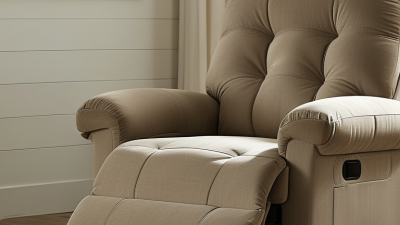
A recliner’s mechanism affects how easily you can settle back and get up. Manual models use a lever or body pressure; powered models move at the touch of a button. Test the transition from upright to fully reclined. It should feel controlled, not jerky, and the footrest should lock without a loud clunk. Try it in person. Check that the chair clears nearby walls and tables as it opens.
Comfort depends on your body, not just a soft seat. Sit for several minutes with your feet raised. Your lower back should feel supported, while your knees and shoulders stay relaxed. If the seat edge presses behind your knees, the depth may be wrong. Leather can feel cool at first and warmer after sitting, so assess it in the room where you plan to use the chair. A plush cushion may feel inviting, but too much sink can make standing harder.
Look for a stable frame and smooth movement, then check the maker’s stated weight capacity and care instructions. Powered mechanisms need an accessible outlet and may require more service than a simple manual design. That trade-off is easy to overlook. Notice whether the headrest and lumbar support still align when reclined; some chairs fit one posture better than another. A short showroom test helps, but it cannot fully predict months of daily use.
How to Choose the Best Leather Reclining Chairs
A good leather reclining chair must fit your room before it fits your taste. Measure width, depth, and height, then check the fully reclined length. Leave walking space beside the arms and enough clearance behind the backrest. Measure doorways, stair turns, and elevator openings before ordering. I once measured only the chair width and regretted it. Reclining needs space. Seat height matters too. Your knees should bend naturally, while your feet rest without pressure.
Construction determines whether comfort lasts beyond the showroom visit. Look for a stable frame, evenly supported joints, and a smooth reclining mechanism. Test the chair several times; grinding, sudden stops, or side-to-side movement deserve attention. Dense cushioning should recover after you stand, not remain visibly compressed. Inspect stitching around the seat, arms, and footrest, where stress appears first. Leather should feel supple, but not thin or excessively slippery. Ask how the material is finished and whether repairs are practical. A heavy chair is not automatically stronger. That assumption can be costly.
Maintenance needs vary with leather finish and household habits. Wipe dust weekly with a soft, dry cloth. Clean spills promptly, using a slightly damp cloth rather than soaking the surface. Avoid harsh detergents, abrasive pads, and unapproved oils. Keep the chair away from radiators and strong afternoon sunlight. Conditioning may help some leathers, but excess product can leave greasy marks. Check the care instructions before treating a hidden area. I still prefer a small test patch, because cleaning advice is rarely universal. If children, pets, or frequent guests use the chair, inspect seams monthly. Small damage is easier to address before the padding shows.
How to Choose the Best Leather Reclining Chairs
Your budget should cover more than the chair’s price. Reserve money for delivery, assembly, and possible return fees. A low-priced recliner may look attractive, but weak cushions or a noisy mechanism can become expensive later. Check the frame, reclining hardware, stitching, and leather finish before deciding. Sit for at least ten minutes. Comfort changes with time.
Quality should match your daily use. Full-grain or top-grain leather usually offers better durability, while corrected leather may reduce the cost. Ask whether every visible surface uses leather or a synthetic match. Inspect the seat seams closely. Even stitching is a reassuring detail. Still, appearance can mislead. I once underestimated cushion firmness because the showroom model felt softer than the delivered chair.
Warranty terms deserve careful reading. Confirm coverage for the frame, reclining mechanism, upholstery, and labor. Some warranties cover parts but exclude transportation or technician visits. Ask how claims are handled and whether coverage decreases over time. Keep your receipt and delivery photographs. They can support a legitimate claim.
Delivery service also affects value. Threshold delivery may leave a heavy chair at your entrance. Room-of-choice service costs more but reduces lifting risks. Confirm stair access, doorway measurements, packaging removal, and assembly fees. Inspect the chair before signing for delivery. Report scratches, torn seams, or mechanical problems immediately. A slightly higher total price may provide better protection, but not always. Read every condition before paying.