Top 10 Bamboo Cooling Mats Manufacturers Worldwide

Bamboo Cooling Mats offer a simple way to create a cooler-feeling surface for beds, sofas, and floor seating. Their smooth bamboo strips can feel pleasantly cool against the skin, especially in warm rooms. Yet comfort depends on more than appearance. The weave, stitching, backing, and size all affect how a mat feels and holds up over time. Details matter.

This guide introduces ten manufacturers serving different markets and product needs. It considers practical factors such as material descriptions, construction quality, available dimensions, product range, and how clearly each company shares its specifications. Where information is available, buyers should also check care instructions, warranty terms, and relevant product testing. A polished product photo is not enough. Look closely at the edges and joints.

No single manufacturer is right for every household or retailer. Some buyers may prioritize a lightweight mat that rolls away easily, while others need a larger option with reinforced edging for frequent use. Pricing, availability, and specifications can also change, so verify current details directly with each manufacturer before placing an order. This overview is a starting point, not a substitute for hands-on evaluation. Small inconsistencies in product information deserve a second look. By comparing manufacturers carefully, readers can better identify Bamboo Cooling Mats that match their comfort preferences, intended use, and quality expectations.
Top 10 Bamboo Cooling Mats Manufacturers Worldwide

Definition and Key Features of Bamboo Cooling Mats

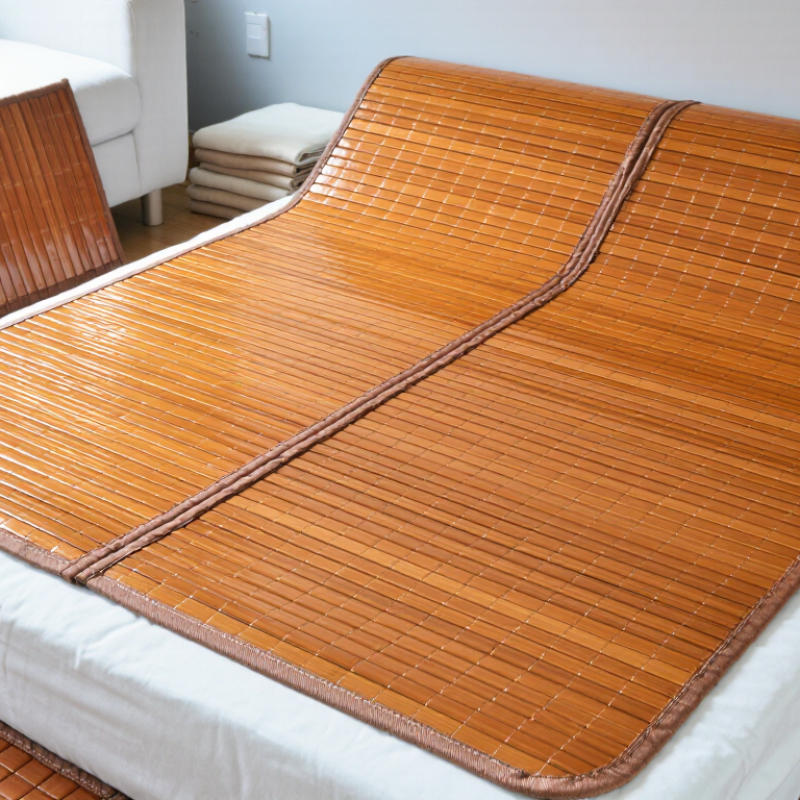
A bamboo cooling mat is a flexible sleeping surface made from smooth bamboo slats or woven bamboo strips, usually joined with thread. It rests on a mattress, floor, or chair. The firm surface allows air to move around the body more freely than many padded fabrics. It may feel cool to the touch, especially in a shaded, well-ventilated room, but it does not actively lower room temperature. Construction matters: evenly spaced slats, smooth edges, and secure stitching can improve comfort and reduce snagging.

Tips: Check the mat’s dimensions against your bed or seating area. Run a hand across the surface to feel for rough edges. Keep it dry, and follow the care instructions; trapped moisture can affect natural materials. Roll it gently for storage rather than folding it sharply.

For shoppers comparing manufacturers worldwide, useful details include bamboo sourcing, slat spacing, backing materials, and quality checks. A thin mat may be easier to move, while a thicker design can feel more substantial. Neither is automatically better. Bamboo can also become less comfortable if the room is humid or the mat has a slippery finish. Cooling is personal, and a mat that feels pleasant in a showroom may feel different after a full night’s use.

Materials, Construction, and Manufacturing Processes

Bamboo cooling mats rely on material selection and careful assembly, not active refrigeration. Manufacturers typically use mature bamboo culms, which are cut into narrow slats, dried, and sanded. Drying helps limit later warping, though results depend on storage and local humidity. Smooth slat edges matter: rough spots can snag fabric or irritate skin. Details matter.

During construction, makers align the slats and connect them with cotton or synthetic cord, leaving small gaps for airflow. Some designs add fabric edging or a thin backing to keep the mat stable. A light, low-odor finish may reduce surface wear, but a glossy coating can feel less natural against bare skin. The mat may feel cool initially; room temperature and airflow still shape comfort. A tidy seam alone does not prove durable workmanship.

Tips: Ask how the bamboo is dried and finished, and check whether the cord feels securely tensioned. Look for even spacing, rounded edges, and no visible splinters. If possible, flex a corner gently. Too stiff? It may sit unevenly on a mattress. Care instructions should explain how to keep the mat dry, since trapped moisture can encourage odor or damage.

Top 10 Bamboo Cooling Mats Manufacturers Worldwide — Materials, Construction, and Manufacturing Processes

A representative manufacturing workflow for bamboo cooling mats. The bar lengths show process order, not production time or market share; specific methods and materials vary by product.

Criteria for Evaluating Global Bamboo Cooling Mat Manufacturers

When comparing global bamboo cooling mat manufacturers, look beyond product photos and price lists. Ask for the bamboo species, slat dimensions, finish, and joining method. Slats should feel smooth, lie flat, and have no sharp edges along the roll. Compare samples from different production batches; one polished sample proves little. Details matter.

Check whether the manufacturer can explain moisture control, drying, and inspection steps in plain language. Request relevant material or chemical test documents, and confirm they match the offered product. A credible supplier should explain how it checks slat gaps, cord strength, odor, and packaging before shipment. Review production capacity, lead times, defect handling, and replacement-part availability. For cooling claims, compare samples under similar room conditions rather than relying on a brief touch test. I would not rank a factory on certifications alone. Paperwork can be current, while a sample may still reveal rough edges or uneven weaving. No checklist is perfect. Record the evidence and any unanswered questions for each candidate.

Profiles of Ten Leading Bamboo Cooling Mat Manufacturers Worldwide

The profiles below compare ten manufacturer types active in the bamboo cooling mat trade; they are not a verified ranking. An export-focused Chinese producer may offer tightly aligned slats and several standard sizes. A smaller workshop can emphasize hand-sanded surfaces and flexible batch quantities. A Vietnamese maker may specialize in roll-up mats for compact shipping. An Indian producer might pair bamboo slats with cotton edge binding. Fit matters. Buyers should check slat spacing, smoothness, and stitching on a physical sample.

A Southeast Asian supplier may source bamboo closer to its production site, though drying practices still need review. A Japanese maker could focus on consistent finishing and neat joins, with fewer customization options. A European manufacturer may concentrate on finishing, inspection, and regional distribution rather than growing bamboo locally. A Brazilian producer could serve nearby markets with sturdy, simple constructions. Ask how moisture is controlled. Poor drying can lead to warping or mildew during storage.

A North American maker may build mats for local retailers and offer packaging adjustments. Another export-oriented factory may provide private-label production, but printed packaging does not prove product quality. These profiles are useful starting points, not endorsements of specific companies. Compare material origin, slat dimensions, odor, flexibility, and edge durability. A mat can feel cool at first, yet comfort varies with room humidity, bedding, and personal preference. Samples reveal more than a catalogue photo. One limitation remains: public factory claims are difficult to verify without audits or independent testing.

Top 10 Bamboo Cooling Mats Manufacturers Worldwide - Profiles of Ten Leading Bamboo Cooling Mat Manufacturers Worldwide

Anonymous market profiles, not a verified ranking of named companies. The table summarizes established bamboo-mat product formats and common manufacturing capabilities; individual company locations, rankings, and specifications are not asserted.

Profile Product Focus Common Construction Materials and Finish Typical Customization Buyer Considerations
Profile 01 Slatted sleeping mats Narrow bamboo slats linked with thread or cord to create a flexible mat. Smoothed bamboo slats; surface finish varies by specification. Dimensions, slat width, edge binding, and carry-bag options. Check slat smoothness, connection strength, and care instructions.
Profile 02 Roll-up bamboo mats Flexible slats joined so the mat can be rolled for storage. Bamboo surface with cord or textile connections. Roll size, binding color, packaging, and private-label packaging. Request packed dimensions and confirm that the mat lies flat when opened.
Profile 03 Foldable panel mats Sections joined to fold into a compact shape. Bamboo panels or slats with flexible joints and finished edges. Panel count, folded dimensions, edge treatment, and storage accessories. Inspect hinges or joints for repeated folding and unfolding.
Profile 04 Bamboo-and-fabric mats Bamboo elements attached to a fabric backing or border. Bamboo combined with textile backing; fabric composition should be specified. Backing fabric, border color, dimensions, and fastening details. Confirm cleaning method and whether the backing is removable.
Profile 05 Woven bamboo mats Bamboo strips or fibers woven into a continuous surface. Woven bamboo; surface texture depends on strip size and weave pattern. Weave, border, mat dimensions, and roll or fold format. Ask for close-up samples to assess weave consistency and edge finishing.
Profile 06 Bed-size cooling mats Large-format slatted or woven surfaces intended for use on a bed. Bamboo construction; any backing or additional layer should be disclosed. Bed size, thickness, surface layout, and packaging configuration. Verify finished measurements and suitability for the intended mattress.
Profile 07 Chair and seat mats Compact slatted or woven mats sized for chairs and seating surfaces. Bamboo surface; optional ties or non-slip backing vary by design. Seat dimensions, ties, backing, and coordinated product sets. Check for secure placement and compatibility with the target chair.
Profile 08 Travel and portable mats Smaller roll-up or foldable formats designed for easier storage and transport. Bamboo slats or woven bamboo, with optional fabric accessories. Compact sizing, carrying straps, bags, and retail-ready packing. Compare packed weight and dimensions, not only the open-mat size.
Profile 09 Decorative bamboo mats Bamboo surfaces with patterned layouts, contrasting borders, or coordinated styling. Bamboo with design details that may include textile trim. Pattern, color treatment, trim, and branded packaging. Request color samples and confirm finish consistency across production lots.
Profile 10 Custom and private-label mats Made-to-order slatted, woven, roll-up, or foldable formats. Material and finish depend on the confirmed product specification. Custom dimensions, labels, packaging, and product combinations. Confirm samples, tolerances, quality checks, order terms, and applicable import requirements.

Regional Markets, Quality Standards, and Industry Trends

Regional Markets, Quality Standards, and Industry Trends

Regional strengths vary. East Asian factories often compete through precise slat finishing and large-scale assembly, while India and Southeast Asia benefit from established bamboo-growing regions. Buyers in Europe and North America commonly seek clear origin records, finish details, and packaging specifications. Geography alone proves little.

Grand View Research estimated the broad global bamboo-products market at USD 72.1 billion in 2022, with projected annual growth of 4.5% through 2030. This figure covers many product categories, not cooling mats specifically; it signals a wider supply base, not guaranteed demand.

Quality checks should go beyond a showroom sample.

Ask suppliers to document slat moisture, smooth edges, coating composition, load-cycle performance, and carton protection. ISO 9001 and ISO 14001 can indicate managed quality and environmental systems, but neither verifies a mat’s cooling performance. Test under humid and dry conditions. Small gaps matter.

Textile Exchange’s Materials Market Report 2024 estimates global fiber production reached 124 million tonnes in 2023, underscoring the scale of material sourcing behind textile-backed products. That statistic is not mat-specific. Still, it makes careful verification of textile and environmental claims worthwhile, especially when supplier paperwork feels polished but incomplete.